Let us know how we can help
Sales & Pricing
Speak to a rep about your business needs

Help & Support
See our product support options
General inquiries and locations
Contact us


Prove What Ran in AI Workflows with Audit-Ready Execution Lineage
See what happens in every AI workflow run—with lineage, model versioning, and audit trails—so you can prove what ran and whether policies and SLAs were met.
If your AI workflows were audited tomorrow, could you prove what ran, who triggered it, and whether policies were met?
Control-M Delivers Execution Lineage and Proof for AI Workflows
Get a real-time record of what runs across your AI workflows—captured as it happens, not reconstructed after the fact.
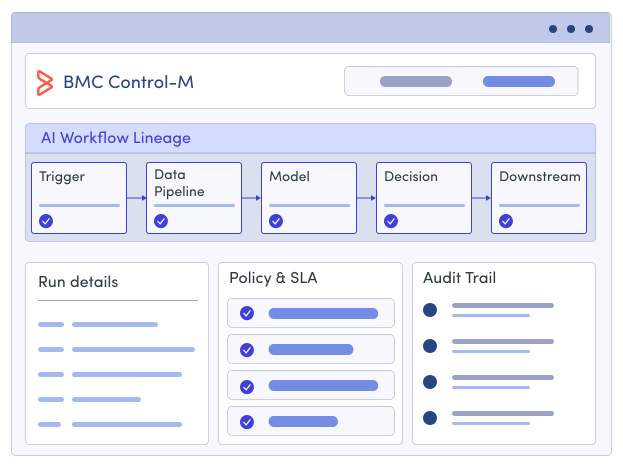
Execution lineage is the runtime record of what actually happens in a workflow run—from trigger, to data preparation, to model execution, to downstream action and final outcome.
Control-M captures that record as each run executes, across AI, data, and application workflows. Instead of piecing together logs and events after an incident or audit request, you work from a continuous record built during execution.
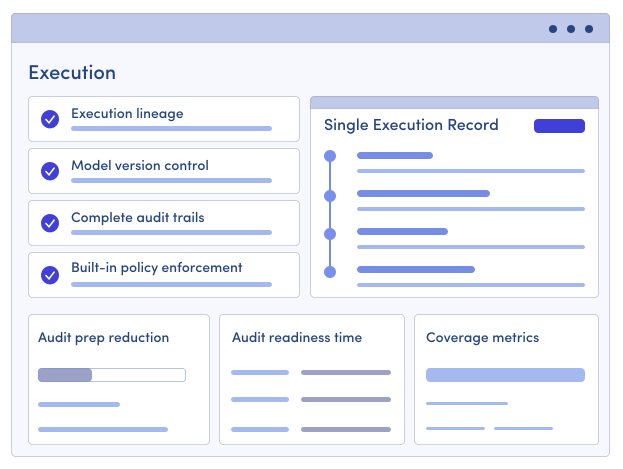
With Control‑M, you get:
- End-to-end execution lineage across workflows, models, data pipelines, and downstream systems
- Model version control and agent version traceability tied to every run
- Complete audit trails—who acted, what changed, what failed, and what was approved
- Built-in policy and SLA enforcement during execution, not after
- One unified execution record across batch, data, and AI workflows
When auditors or risk teams ask for proof, you can answer quickly with evidence.
Why Proving What Ran in AI Workflows Isn’t Easy
Most solutions fall short in three ways:
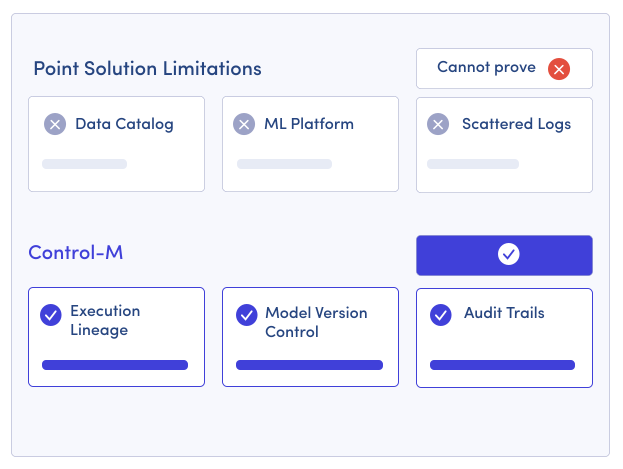
Data lineage isn’t execution lineage
Data catalogs show where data came from. Execution lineage shows what ran—including models, workflows, decisions, and outcomes. For an audit, you need to prove what happened, not just trace inputs.
ML platforms stop before production reality
ML platforms track experiments and models, but not how workflows execute across systems or what happens downstream. What’s tracked in development isn’t what runs in production.
Logs don’t equal audit trails
Logs are fragmented and hard to validate. Audits require structured, replayable records of execution, not raw logs you have to reconstruct. If you’re accountable for risk and compliance, the question is simple: “Can you prove what ran or only reconstruct it after the fact?”
Data catalogs explain data.
ML platforms manage models.
Control-M proves what ran.
How Control‑M Delivers AI Workflow Execution Lineage
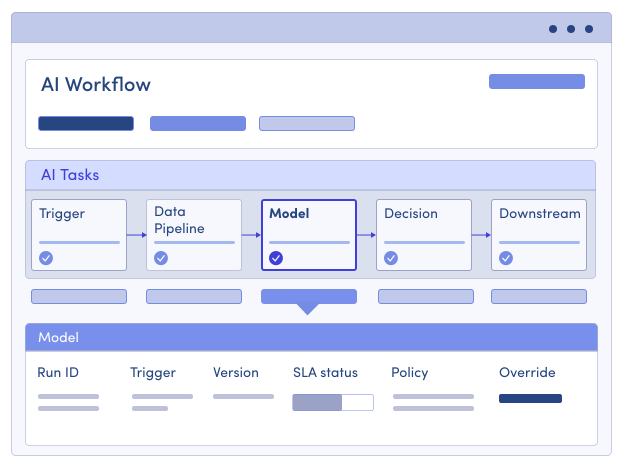
Control‑M gives you a single, traceable view of what runs across AI workflows in production, so you can answer:
- What triggers the run?
- What data pipeline prepares the inputs?
- Which model and version executes?
- What output or decision is produced?
- What downstream systems are updated?
- Are policies and SLAs met?
Across every step, from trigger to result, you can see and prove the full chain.
Simplified Compliance and Faster Audit Readiness
Read the customer story40%
Infosys used Control-M to centralize workflow orchestration, monitoring, and workload archiving across 300+ applications. The result: stronger audit compliance, 90% fewer manual interventions, and a foundation for proving execution history across complex, hybrid workflows.
What to Show an Auditor When Proving an AI Decision
When an auditor asks you to prove how an AI-driven decision was made, Control‑M helps you show the evidence without reconstructing it after the fact.
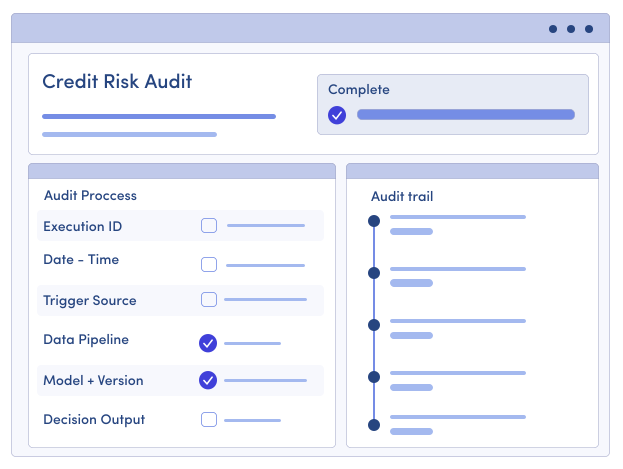
Scenario: Credit Risk Audit
Auditor asks: “Prove a decision made on March 3rd was compliant.”
With Control‑M, you show:
- Execution ID
- Trigger source (scheduled vs manual)
- Data pipelines that prepared inputs
- Model and version used, and whether it was approved
- Approval record (who signed off)
- Decision output and downstream updates
- SLA and policy compliance
- Any retries, overrides, or anomalies
No reconstruction. No guesswork. Just the evidence of what ran
Control-M Gives Every Team Proof of AI Execution
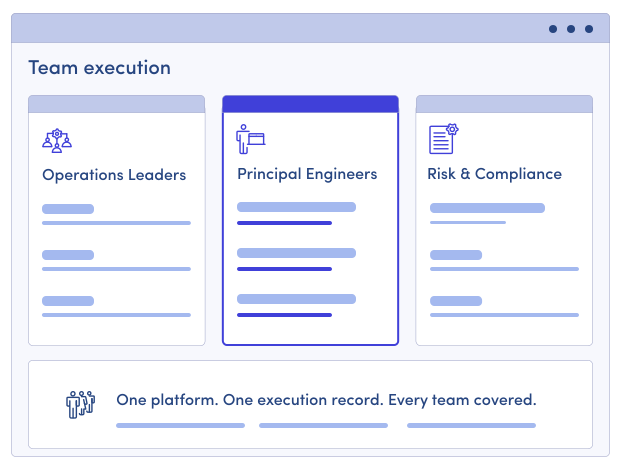
Each team needs a different kind of proof to manage, validate, and defend AI workflows:
- Operations leaders → Need audit-ready visibility into what ran
- Principal engineers → Need end-to-end traceability across pipelines and systems
- Risk & compliance teams → Need verifiable evidence, not narratives
Control‑M brings it all together, so every team works from the same evidence.
Understanding Control-M AI capabilities: key questions answered
“Show Me What Ran”: The New Standard for AI Governance
AI governance is converging on one requirement: “Show me what happened.” Not what was designed. Not what should’ve run. What did run.
A data catalog, an ML platform, or scattered logs still can’t answer the question that matters: “If we’re audited tomorrow, can we prove what ran?”
Control-M can.